Robinette Preserves Historical Buildings for Condo Conversion
February 24, 2026

This article originally appeared in the Sep/Oct 2006 issue of DEMOLITION magazine.
Attention to safety, efficient time management and communication creates an ideal environment for profitable projects in the demolition industry. Although these key elements are common practice among successful demolition companies across the nation, there are select projects involving complex obstacles that demand a higher level of performance. Interior demolition of an occupied building is among the industry’s most delicate procedures. Working within occupied space, whether it is a downtown office building or multiple unit residential building, can be a difficult project to undertake.
Robinette Demolition Inc., an extremely versatile and experienced demolition company from the Oakbrook Terrace, Illinois, area was contracted by Linn Mathes Inc., one of the largest renovation contractors in the nation, to complete one of these delicate projects. The project included the partial demolition and interior strip-out out a wood and masonry construction eight-story infill building structure and the complete interior strip-out of an adjoining 100-plus-year-old 32-story office building in downtown Chicago. The historical buildings are located at 310 S. Michigan Ave. and 318 S. Michigan Ave. along Chicago’s famous Michigan Avenue corridor. They overlook Millennium Park and Lake Michigan and will be rebuilt into multimillion-dollar condominiums.
The structure at 318 S. Michigan Ave., known as the Department of Housing for Chicago, was built in the late 1800s. The building, constructed of wood framing and brick stair cores, is considered an infill, as it was built between the 310 and 330 S. Michigan Ave. buildings. The structure was built without support columns and shares the walls of the adjoining buildings. The front of the building consisted of terra cotta stone facade with brick backing design that had to be preserved because of its historic landmark status.
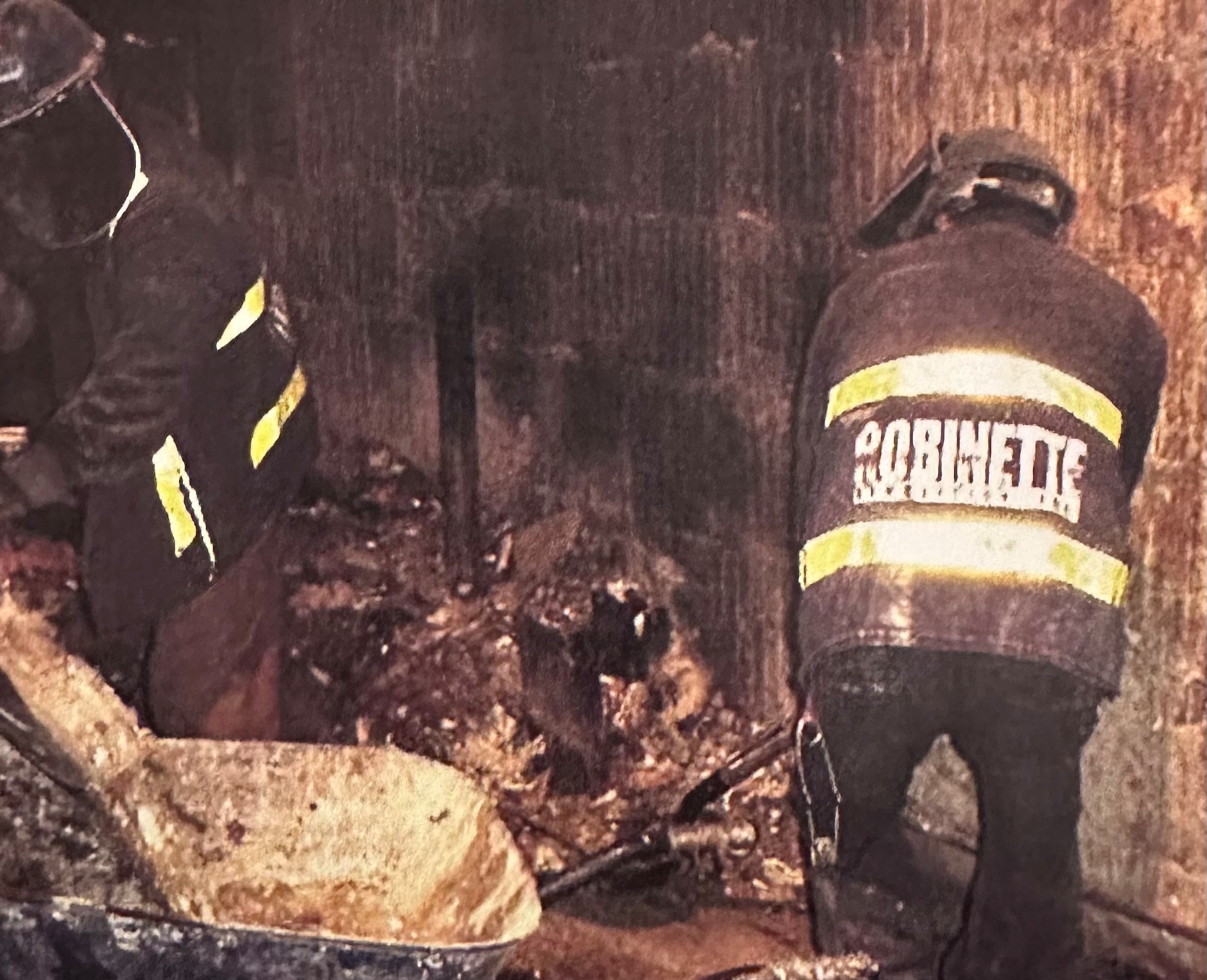 In late 2005, crews started renovations, gutting the interior of the entire structure and removing the rear eight bays of the building. Due to the lack of columns, the front four bays of the building were temporarily shored to maintain the structural integrity until a new bearing wall was built and new columns put in place.
The dismantlement and strip-out of the 318 building was completed in a matter of weeks and will ultimately be reconstructed to include an upper-level owner’s suite and multi-level parking facility for the new lower-level condominiums.
310 S. Michigan Ave. is a 100-year-old clay tile construction with detective terra cotta façade that also maintains historic landmark value in the city of Chicago. The interior demolition started with days of exploratory work involving planning and organization. All the existing mechanical, electrical and plumbing systems needed to be meticulously removed. In nine existing elevators and create new structural openings for the building’s new parking ramps, elevators and stairs. The interior project encompassed unique and detailed interior modifications of 27 floors within the occupied office building.
Robinette coordinated with Linn-Mathes’ project manager, Jeff Sagstetter, to devise an effective work plan. Pete Mitacek, Robinette’s interior demolition superintendent, and Don Collier, the project’s senior foreman, organized multiple teams of foremen, equipment operators and laborers for the project. Robinette used 20 to 30 men daily and over 55,000 man-hours to complete this 700,000-square-foot project.
Working nights and some around-the-clock shifts, the crews used small 400 series Bobcat skid steers with specialized attachments and standard hand tools to complete the demolition of the project. A Brokk 90 was used to clear out the third-floor stairwell and create additional slab openings for the new lower-level parking structure for the 310 building.
Although the majority of the demolition of 310 was completed by hand, the removal of the massive amounts of debris generated required a more efficient method. To dispose of the 1,200 loads of debris from throughout the building, Robinette installed a 24-story-tall 3-foot-by-3-foot Chutes International metal chute in one of the abandoned elevator shafts. The chute terminated at the heavily reinforced concrete second floor. The crews used the freight elevator to move the small skid steers from floor to floor to demo the plaster walls and ceilings and load debris into the chute.
Two Caterpillar 246 series skid steers were hoisted to the second floor to remove the debris and load the 30- and 50-yard dump trailers from the second floor ramp.
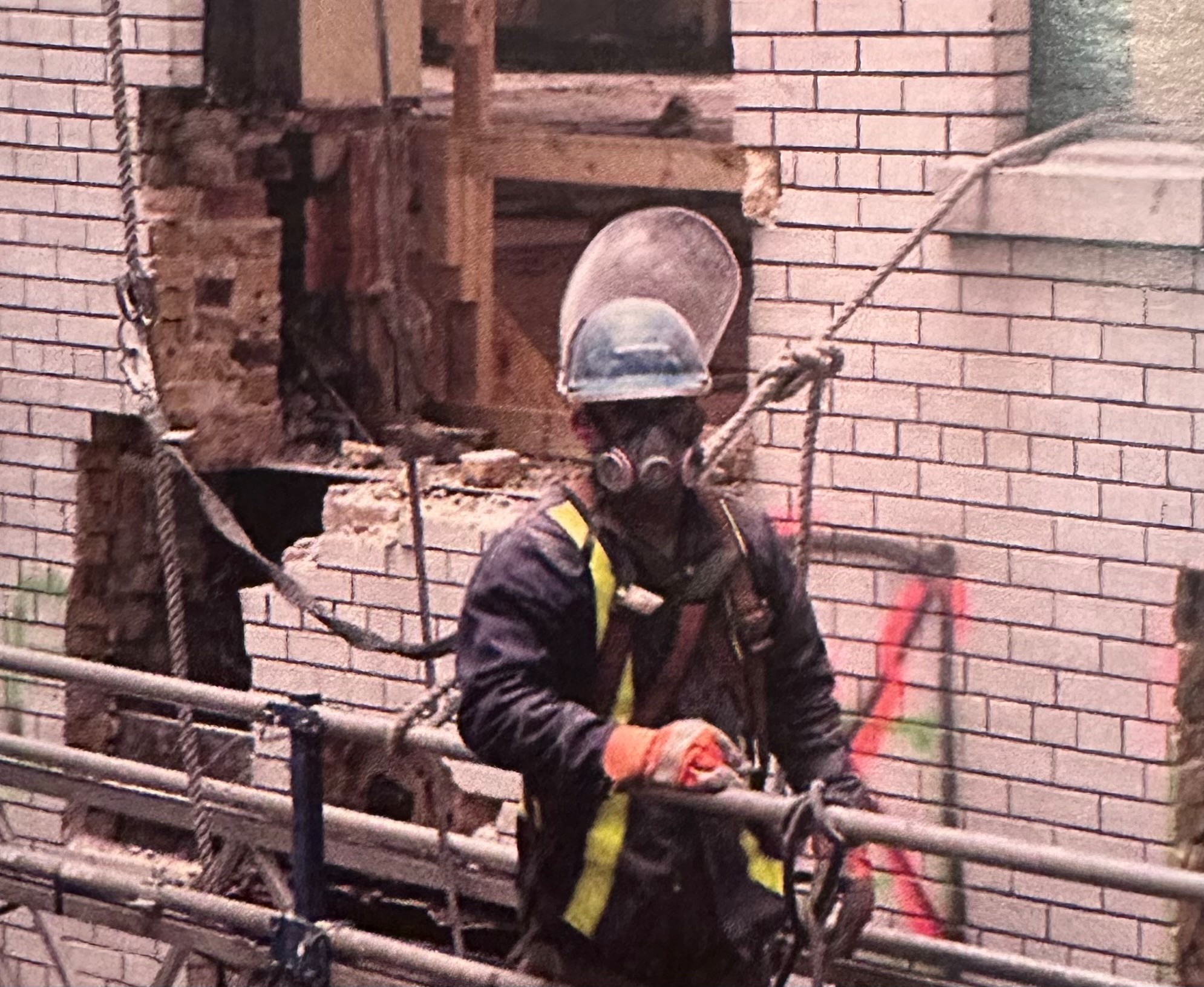 Each skid steer was equipped with an exhaust gas purifier, and portable air scrubbers were used to continuously clean and recirculate the air on the floors where the skid steers were used. The demolition and debris disposal operation ran 10 to 12 hours a night while the building was occupied. They switched to a 24-hour schedule when the remaining tenants vacated the building.
Interior demolition within an occupied space means the consideration of several unique characteristics. Robinette crews worked in tandem with Linn-Mathes’ project superintendent Scott Schuchalong with the owner and remaining tenants to accommodate their needs while still performing timely, detailed interior demolition.
Bill Baxa, Robinette’s chief estimator and the Michigan Avenue project manager, recalls the complications of occupied space work. “The key is to oblige as much as possible and be prepared,” he said. “We have a lot of experience with projects along the same vein, and there’s not a whole lot we can’t deal with.”
Robinette’s ability to address the issues pertaining to the remaining occupant requests, the congestion and high traffic area on Michigan Avenue and the related working conditions led to the overall satisfactory outcome of this project.
Robinette Demolition is well-known within the industry for the large amount of interior and occupied space work they perform, and this high-profile Michigan Avenue job is no exception.