Growing Up in the Demolition Business
April 28, 2026
By: Ronald K. Hayden

This article originally appeared in the March 1990 issue of DEMOLITION magazine, then called Demolition Age.
In 1945, Hayden Wrecking Corporation was formed as a family-owned business, specializing in building demolition. Every item was salvaged for resale from the plaster lath to the nails that were used to secure them to the roof rafters and the sheeting. During this period, everything that was not sold on the jobsite was taken into our yard for resale at a later date. The nails were pulled out of all the lumber, and the larger dimensional lumber was sized to fill orders for hundreds of new homes constructed of used lumber, doors and plumbing fixtures.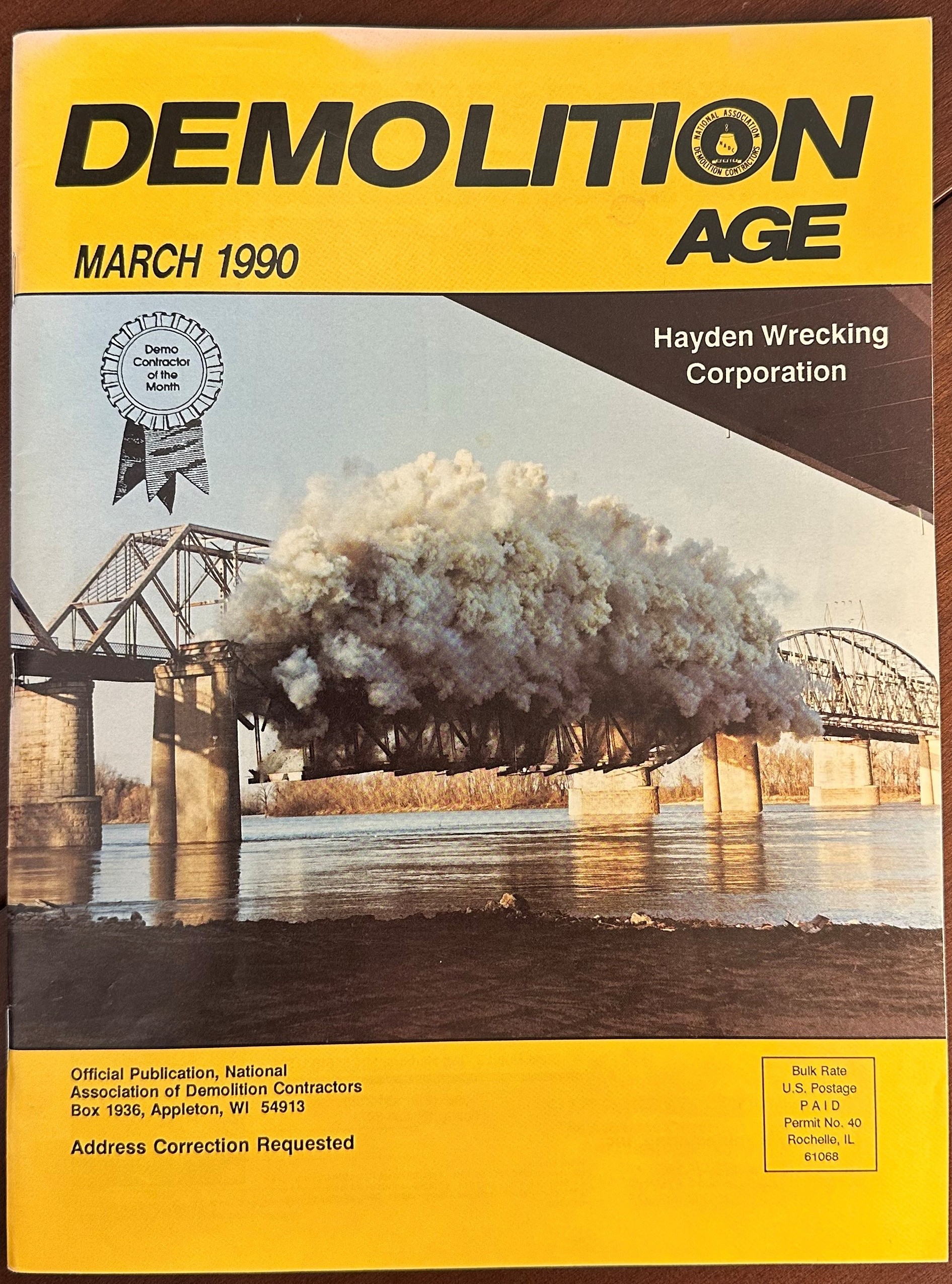
During these first years, the work was hard but rewarding, and under the direction of my father and with the hard work and help of my mother, the company prospered.
In the late 1950s and early 1960s, the times started to change. With the State Highway Program and the urban renewal programs beginning, time was of the essence, and the salvage of material was not feasible because of the time delay required in hand-wrecking versus machine methods.
Still specializing in building demolition in the 1960s, our firm started to expand outside of the St. Louis area into state highway programs and urban renewal projects in the states of Illinois, Missouri, Kentucky and Ohio, dismantling thousands of homes and commercial structures in the process.
By the late 1960s and early 1970s, the highway and urban renewal programs were coming to a close, and we had gained a reputation as a dependable, cost-conscious and safe demolition contractor. Our business turned from primarily a building demolition company into a commercial and industrial plant dismantling company, relying on repeat and referral business in these areas.
Having gained a great deal of expertise in dismantling operations in the chemical and oil refineries during this phase of our business, we have been fortunate to work on the Monsanto Company, Big River Zinc, Ethyl Petroleum Additives, Mobil Oil refinery and the Shell Oil refineries in our area on a continuous basis.
In addition to these facilities, we have been referred to and have performed work for, numerous other companies outside our immediate area and the bordering states.
Over the last four years, our firm has experienced a great deal of growth with the volume of work and the building of a new office at the site of a former castings plant, adjacent to our old yard, which encompasses approximately 8.5 acres with numerous warehouses on-site. We are capable of placing our usable equipment in close proximity to the various plants where we perform work in.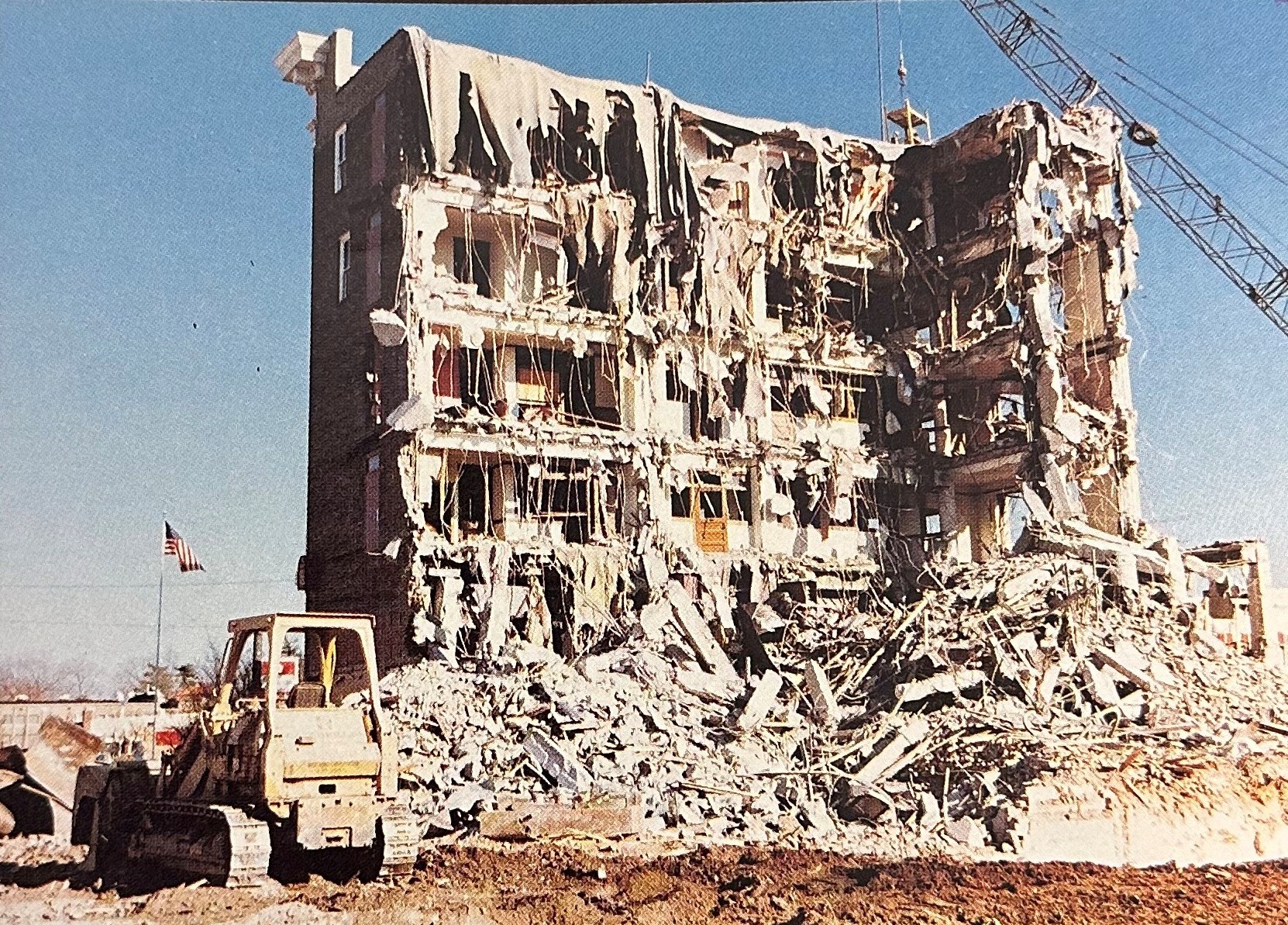
One of the most interesting projects we completed recently was the dismantling of a coal tipple, 46 coal cars, one 5761 Marion shovel (one of the largest erected in the world in 1961) and two smaller shovels and various mining equipment that the Associated Electric Mining Facility had in western Missouri.
Another interesting project we have just started for Allis Chalmers Corporation is the complete dismantling of the KILnGAS Commercial Module. It is a facility for demonstrating new technology involving the conversion of coal to gaseous fuel. Located in East Alton, Illinois, adjacent to an Illinois Power Company electric generating plant. It underwent construction from 1981 to 1983 and was used for demonstration testing from 1984 through 1987, and was maintained in a restart condition from 1988 to the present.
Some of the other interesting projects completed recently were:
- The Chlor/Alkali Phase II Project, the Sulfuric Acid and Chlorosulfuric Acid Units, The Main Shop and Auditorium at the Monsanto Company, W.G. Krummich Plant, Sauget, Illinois.
- The dismantling of the 1,250-foot approach and four 450-foot spans of the Lewis Bridge for the state of Missouri.
- The dismantling of the former Cahokia Downs Race Track in Alorton, Illinois, for Aalco Wrecking Company/Ogden Corporation.
- The demolition of the former Bank of Edwardsville and adjacent commercial buildings for the New Madison County Administration Building in Edwardsville, Illinois.
- The dismantling of the entire Mobil Oil Refinery for Mobil Oil Corporation in Sauget, Illinois.
Having grown up in a demolition environment all my life, I feel satisfied with my life and my accomplishments. However, as I look to the future, I wonder about the restrictions and legal entanglements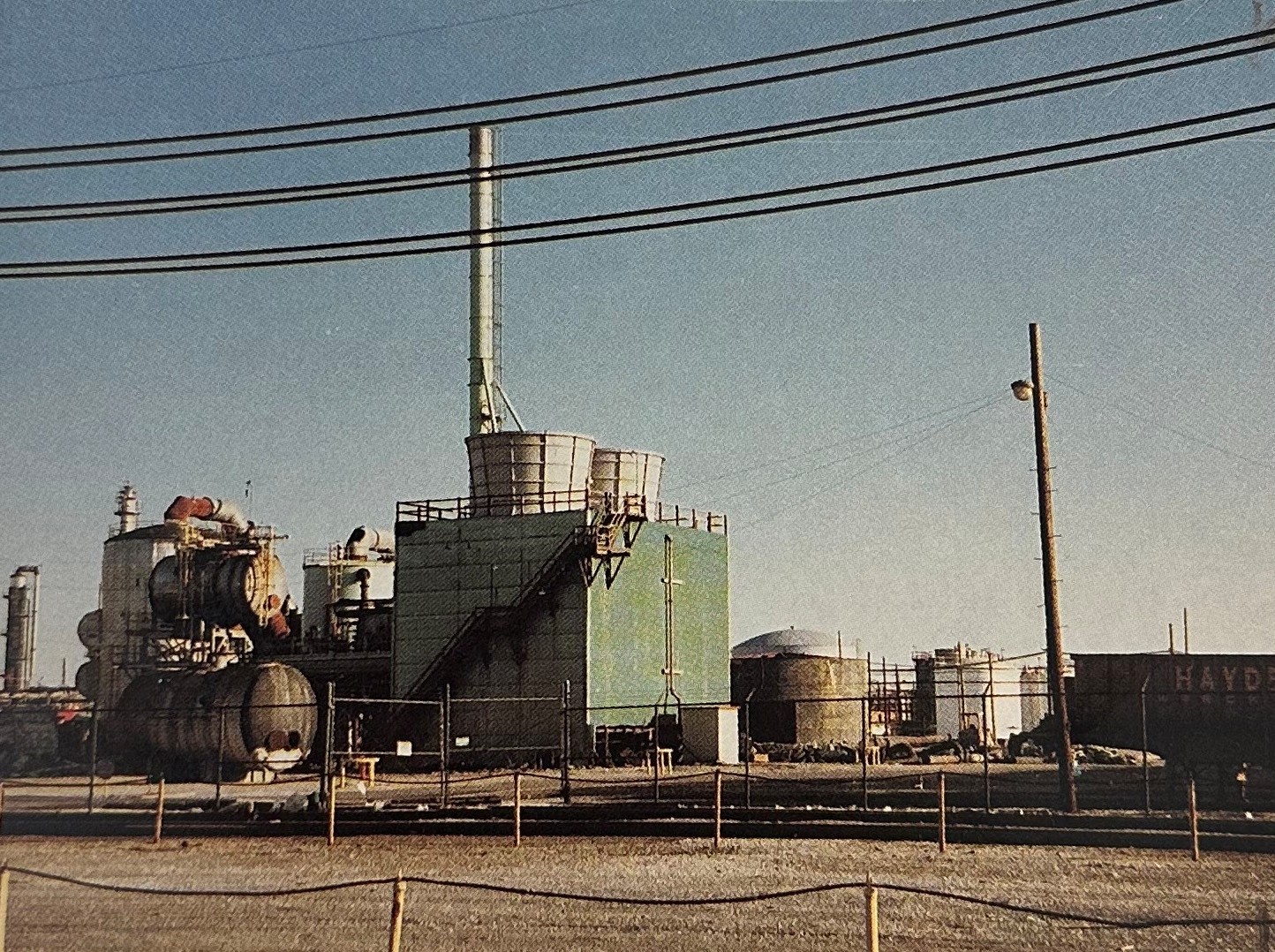 surrounding our industry, and the time and paperwork involved to be in compliance with all these regulations.
Having been accustomed to a strict insurance carrier at the beginning of my involvement in the business, our adjuster reviewed each job and made recommendations prior to issuance of a certificate of insurance. Thereafter, he made frequent jobsite visits. Our firm became accustomed to providing a safe and economical work atmosphere for our employees, clients and adjacent property owners. We also were fortunate in having the guidance of capable engineers in the various chemical refinery plants to give us sound advice on questionable matters regarding the safe dismantling of process lines and vessels. We have never had a serious injury resulting from our projects.
Having been a longtime member of NDA and also a past member of the board, I feel that this experience has made our firm aware of the many problems facing all of us in the industry. Through the annual NDA convention and our trade magazine, Demolition Age, we have been exposed to various pieces of new demolition equipment available in today’s market. With this exposure, we have invested in the future, securing some of the state-of-the-art equipment to perform cost-effective, safe and expeditious projects for our clients.
Our present fleet of equipment consists of the following major pieces: two 977 Caterpillar Traxcavators with Peterson demolition buckets, one 1T12 integrated loader with attachments, one LS3400 Linkbelt excavator equipped to handle our LaBounty 116 shearer, LaBounty grapple, Allied breaker and Ohio Magnet Package, one RT 625 Grove hydraulic crane, one 89 Kenworth tractor with roll-off system.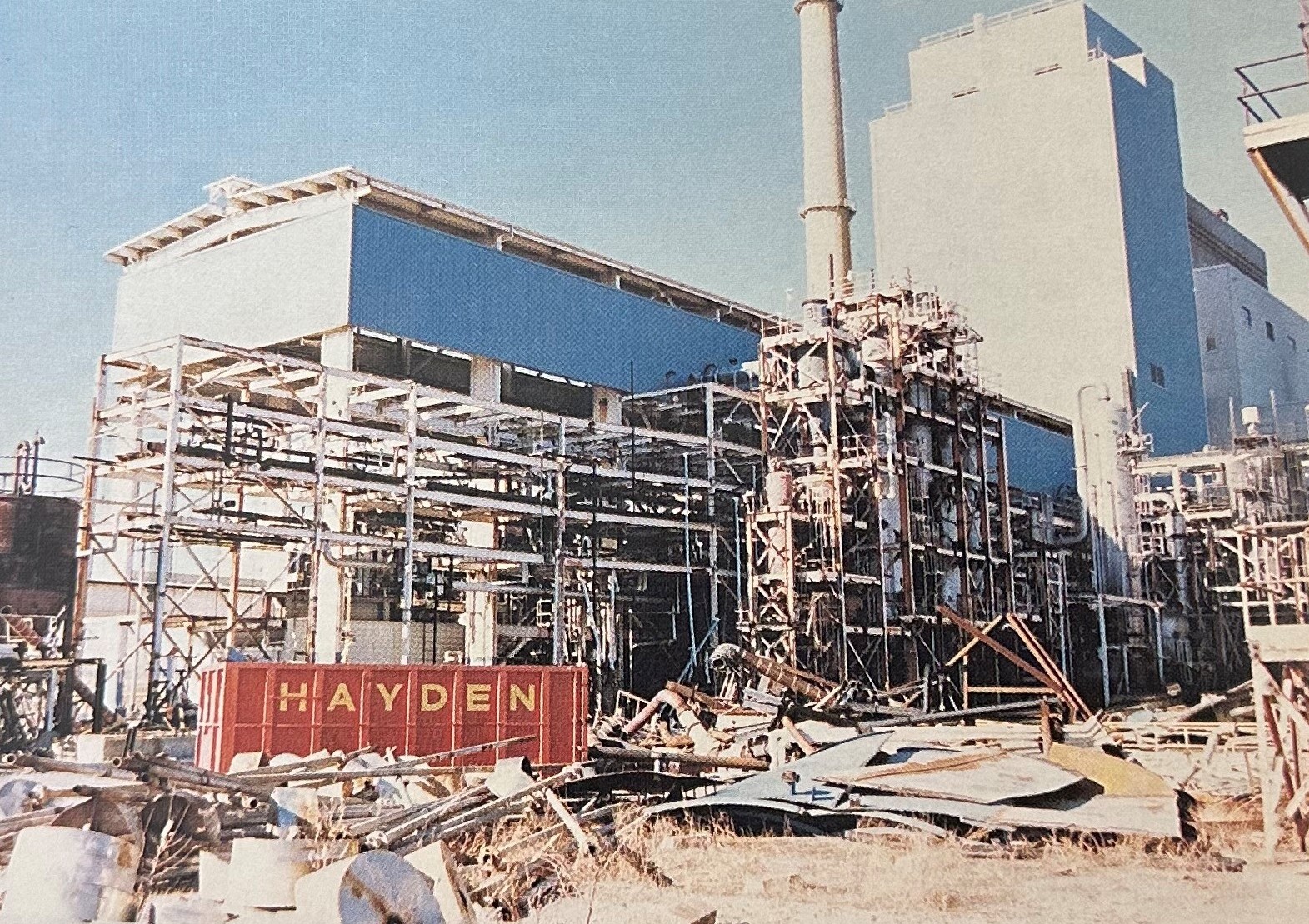
Although we are somewhat of a small company, we employ 15 full-time employees and average approximately 20-30 employees throughout the year on our various projects. My wife, Donna, has the duties of office manager as well as being in charge of me and four children, which requires 24-hour supervision.
At this time, we do not know in which direction the children are headed, having three children in college and an eighth grader. One of the boys has shown some interest in continuing the business, while the others tend to look in other directions outside the demolition business. Hopefully, they are rewarded in whatever they undertake.